Saturday, January 30, 2010

Ralph McInerny (1929-2010)

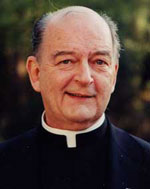
Dr. Ralph McInerny died on Friday, at the age of 80. Zenit reports:
Ralph McInerny was a professor of philosophy and the Michael P. Grace Professor of Medieval Studies at the University of Notre Dame.

He held degrees from St. Paul Seminary, University of Minnesota and Laval University, and had taught at the University of Notre Dame since 1955. He directed the Jacques Maritain Center from 1979 to 2006.

He was an acknowledged expert on the writings of St. Thomas Aquinas, and a prolific author. He penned over two dozen scholarly books, many more scholarly essays, and over 80 novels.

He wrote the popular book series Father Dowling Mysteries, which became a successful television program starring Tom Bosley and Tracy Nelson. ...

In 1982, he co-founded Crisis Magazine with Michael Novak. The publication is now known as InsideCatholic.

In 2006, he published his autobiography titled I Alone Have Escaped to Tell You: My Life And Pastimes.

Perhaps it is fitting, that he should pass one day after the feast of St. Thomas Aquinas.

Bookmark and Share

Thursday, November 05, 2009

George Washington and Catholics

From Donald McClarey @ American Catholic, a great post on George Washington and Catholics, including his forbidding his troops to engage in "anti-popery" on Guy Fawkes Day.

Saturday, July 04, 2009

Charles Carroll -- America's Catholic Founding Father

Charles Carroll of Carrollton was a delegate to the Continental Congress and later United States Senator for Maryland. He was also the only Catholic to have signed the The Declaration of Independence. One of the wealthiest men in the colonies, it is reported that -- upon fixing his signature,
a member standing near observed, "There go a few millions," and all admitted that few risked as much, in a material sense, than the wealthy Marylander.
(The Life of Charles Carroll of Carrollton, 1737-1832, by Kate Mason Rowland).

A new biography, American Cicero: The Life of Charles Carroll (Lives of the Founders) (ISI) will be published in February 2010. (Tip of the hat to Carl Olson). The author, Dr. Bradley J. Birzer, was recently interviewed by the Washington Times:

Q: Carroll was the last of the signers to die. What did he have to say about America at the end of his life?

A: He was so critical of what happened to the republic after the founding. He's very critical of the democratic element in the American republic - he's worried that self-interest and greed are replacing republican virtue. So from the late 1700s, Carroll starts being called "the hoary-headed aristocrat." He starts to be seen as a relic of an older age. But after Carroll dies, there's a resurgence of his reputation. All across the country, the headlines read, "The last of the Romans is dead."

And he was one of Alexis de Tocqueville's main informants. So there are moments in de Tocqueville's Democracy in America (Penguin Classics) when he is being critical of the democratic spirit, and it seems very clear to me that he is taking that from his interview with Carroll.

Q: What does history get wrong about Carroll?

A: I'm always amazed at how much our own history, especially [in] our textbooks, tends to portray the founders as merely enlightened figures. And there's no doubt they were. But the vast majority were Christian - Franklin and Jefferson being the exceptions that so many focus on. And the American people were intensely religious, mostly Protestant, at the time of the founding. I think it's dangerous that we secularize the founding so much. We need to know the context - we need to know what inspired them to fight for liberty.

Read the whole thing.

This would make the second book published recently about the Catholic founding father, the first being Scott McDermott's Charles Carroll of Carrollton: Faithful Revolutionary (Scepter Publications, 2001).

McDermott, a circulation librarian at Vanderbilt University Divinity School, writer and convert, began studying about Carroll after he came into the Church -- In 2005, Zenit News interviewed him about his biography and Carroll's influence on the founding fathers (Part I | Part II).

* * *

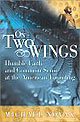
I concur with the observation that the religiousity of many of our founding fathers is sadly overlooked and much neglected. Michael Novak made an important contribution to restoring a proper recognition to the religious roots of America's founding with his On Two Wings: Humble Faith and Common Sense at the American Founding (2001), followed by Washington's God, a study of the religious faith of the pre-eminent 'Father of our Country'.

Bookmark and Share

Evangelical Catholicism: Pope John Paul II on Patriotism

Michael Joseph (formerly of Vox Nova), his wife Katerina and several of his friends are resurrecting the blog Evangelical Catholicism.

He commemorates the 4th of July with a thoughtful reflection on the nature of patriotism as distinguished from nationalism, with recourse to John Paul II's Memory and Identity.

Well worth reading.

Thursday, January 08, 2009

Richard John Neuhaus, 1936-2009

From Jody Bottum:
Fr. Richard John Neuhaus slipped away today, January 8, shortly before 10 o’clock, at the age of seventy-two. He never recovered from the weakness that sent him to the hospital the day after Christmas, caused by a series of side effects from the cancer he was suffering. He lost consciousness Tuesday evening after a collapse in his heart rate, and the next day, in the company of friends, he died.

My tears are not for him—for he knew, all his life, that his Redeemer lives, and he has now been gathered by the Lord in whom he trusted.

I weep, rather for all the rest of us. As a priest, as a writer, as a public leader in so many struggles, and as a friend, no one can take his place. The fabric of life has been torn by his death, and it will not be repaired, for those of us who knew him, until that time when everything is mended and all our tears are wiped away.

Funeral Arrangements

A Funeral Mass was celebrated for Father Richard John Neuhaus at the Church of the Immaculate Conception—414 E. 14th Street, New York City—on Tuesday, January 13, 2009.

A Christian wake service in the form of a Vigil for the Deceased was celebrated at the Church of the Immaculate Conception on Monday evening, January 12.

In lieu of flowers, donations are requested for Fr. Neuhaus’ work, the Institute on Religion and Public Life, online at this page or by mail to:

Institute on Religion and Public Life
156 Fifth Avenue
Suite 400
New York, NY 10010

“When I come before the judgment throne, I will plead the promise of God in the shed blood of Jesus Christ. I will not plead any work that I have done, although I will thank God that he has enabled me to do some good. I will plead no merits other than the merits of Christ, knowing that the merits of Mary and the saints are all from him; and for their company, their example, and their prayers throughout my earthly life I will give everlasting thanks. I will not plead that I had faith, for sometimes I was unsure of my faith, and in any event that would be to turn faith into a meritorious work of my won. I will not plead that I held the correct understanding of “justification by faith alone,” although I will thank God that he led me to know ever more fully the great truth that much misunderstood formulation was intended to protect. Whatever little growth in holiness I have experienced, whatever strength I have received from the company of the saints, whatever understanding I have attained of God and his ways - these and all other gifts received I will bring gratefully to the throne. But in seeking entry to that heavenly kingdom, I will…look to Christ and Christ alone.”

Richard John Neuhaus. Death on a Friday Afternoon

Notices

Reflections

* * *

The story of the modern social conservative movement is all about activism and politics, petitions and court cases, but Father Neuhaus’s great testament was about something grander: through those he inspired, through his writings, through his organizing, and through something as simple as connecting people over lunch who may share nothing in terms of what they can eat on the table but share greatly in what is unseen, Father Neuhaus fundamentally changed religious life in America forever.

This is not an exaggeration. Nor by any means is it a dismissal of anyone else’s influence - but ultimately, the changes most other conservative thought leaders have helped achieve in the twentieth century were made at the hands of other men, elected to office. Father Neuhaus did not merely inspire the intellectual undergirding of change: with God’s help, he fashioned it himself, through hard work, a gift for eloquence, and always a wry smile at the end.

The world Father Neuhaus leaves is one where evangelicals and Catholics are more united than they are divided - where the old ethnic politics and arguments have faded, and where we worship and work together in harmony. My mother, never anything but a Protestant, upon learning of this Catholic convert priest’s passing, wrote to say she paused on learning the news to sing Faure’s Pie Jesu for him. I can think of nothing more fitting.

-- From Ben Domenech, RedState.com

* * *

His conviction that abortion was the great crime of the age and his disgust with the American system’s failure to expunge the crime led to the most controversial act of his editorship, the publication of a symposium entitled “The End of Democracy?” in which he and other participants flirted with the notion that the United States had lost its legitimacy. COMMENTARY’s editors responded in part with a symposium entitled “On the Future of Conservatism,” in which various contributors argued heatedly against what they perceived to be an unacceptable radicalization of conservative discourse.

The breach was never fully healed, and yet, through it all, there was Richard, a man of great personal good cheer and bonhomie, always in possession of a terrific piece of gossip he always knew exactly when and how to drop in order to cause the biggest commotion, who somehow found the time to crank out thousands of words a month while jetting back and forth from Rome, engaging in plots and subplots and side bets. He was an exemplar of the truism that a righteous man need not be or conduct himself as though he were holier-than-thou. But in the end, his work was his life, and whether he was ministering to fatherless youths in Brooklyn or offering his considered and always highly informed opinion on the matter of stem-cell research, Richard John Neuhaus did what he did and said what he said for the betterment of humankind and for the greater glory of God.

John Podhoretz, Commentary Magazine

(More tributes are being collected by Steve Dillard @ Southern Appeal)

Wednesday, October 22, 2008

If you haven't been visiting The American Catholic this month, here's just a taste of what you're missing:

Monday, September 29, 2008

Archbishop Charles Chaput interview on Religion and Politics

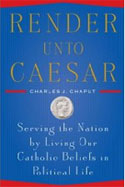
Archbishop Charles Chaput is participating in an extended chapter-by-chapter interview with Peter Robinson (Uncommon Knowledge), on his new book, Render Unto Caesar: Serving the Nation by Living our Catholic Beliefs in Political Life and related topics in U.S. politics and the Church.
  1. Politics & Catholics with Charles Chaput: Chapter 1 of 5
    Archbishop Charles Chaput corrects House Speaker Nancy Pelosi, who has said the Catholic Church’s teachings on abortion aren’t clear. On the contrary, Chaput says the Church has long held that abortion is always and in all circumstances wrong. He also says Sen. Joe Biden’s position on abortion — that people should not impose their beliefs on the subject on others — is highly flawed.

  2. Politics & Catholics with Charles Chaput: Chapter 2 of 5
    Archbishop Chaput describes Vatican II as the “primary grace of God to the Catholic Church in the 20th century.” And yet, since Vatican II, the Catholic Church in America has suffered greatly. In particular, the numbers of Catholic seminarians, priests, and nuns have plummeted. Chaput explains why this is, and is not, a dilemma.

  3. Politics & Catholics with Charles Chaput: Chapter 3 of 5
    Archbishop Chaput describes the relationship between Jesus and Caesar, or between Catholics and the state: First, Jesus acknowledged his responsibilities to Caesar. Second, Jesus demoted Caesar, making clear that “God is God and Caesar is not.” Third, Jesus remained silent about what belongs to Caesar and what belongs to God, allowing for individual determinations on the duties of citizens.

  4. Politics & Catholics with Charles Chaput: Chapter 4 of 5
    Archbishop Chaput has written that “The logic behind abortion makes all human rights politically contingent.” For example, Chaput explains that if our leaders can decide when life begins, they also can make determinations about when life should end. Overall, Chaput describes what is a coarsening of the value of life in the Western world.

  5. Politics & Catholics with Charles Chaput: Chapter 5 of 5
    Archbishop Chaput says Catholic Democrats have an obligation to change their party’s platform on abortion, just as Catholic Republicans are responsible for keeping their party pro-life. Moreover, he says the Catholic position on abortion need not be just a Catholic position, but an American position.

Sunday, September 14, 2008

Benedict, Sarkozy and "Positive Secularism"

A prevalent topic in Benedict's apostolic journey to France is (understandably) the role played by religion within the context of France's longstanding enforcement of secularity, or laïcité.

During a brief press conference on Friday, when asked whether "France is losing its Christian identity because of laicism" -- Pope Benedict responded in the negative:

It seems evident to me today that laicism does not contradict the faith. I would even say that it is a fruit of the faith, since the Christian faith was a universal religion from the beginning. Therefore it did not identify itself with a state and it was present in all the states. It was always clear to the Christians that religion and faith were not political, but rather they formed part of another sphere of human life. ... Politics, the state, were not a religion but rather a secular reality with a specific mission, and the two of them should be open to each other.

In this sense, I would say today that for the French, and not only the French, but also for us, Christians of today in this secularized world, it is important to joyfully live the freedom of our faith, live the beauty of the faith, and show today's world that it is beautiful to be a believer, that it is beautiful to know God; God with a human face in Jesus Christ, show that it is possible to be a believer today, and even that society needs there to be people who know God and who, therefore, can live according to the great values that it has given us and contribute to the presence of these values that are fundamental for the building and survival of our states and societies.

Later, during a meeting with French politicians at the Elysée Palace, after reminding his audience of France's Christian heritage and roots, the Holy Father again urged a rethinking of the relationship between church and state:

Many people, here in France as elsewhere, have reflected on the relations between Church and State. Indeed, Christ had already offered the basic principle for a just solution to the problem of relations between the political sphere and the religious sphere when, in answer to a question, he said: “Render to Caesar the things that are Caesar’s, and to God the things that are God’s” (Mk 12:17). The Church in France currently benefits from a “regime of freedom”. Past suspicion has been gradually transformed into a serene and positive dialogue that continues to grow stronger. A new instrument of dialogue has been in place since 2002, and I have much confidence in its work, given the mutual good will. We know that there are still some areas open to dialogue which we will have to pursue and redevelop step by step with determination and patience. You yourself, Mr President, have used the fine expression “laïcité positive” to characterize this more open understanding. At this moment in history when cultures continue to cross paths more frequently, I am firmly convinced that a new reflection on the true meaning and importance of laïcité is now necessary. In fact, it is fundamental, on the one hand, to insist on the distinction between the political realm and that of religion in order to preserve both the religious freedom of citizens and the responsibility of the State towards them; and, on the other hand, to become more aware of the irreplaceable role of religion for the formation of consciences and the contribution which it can bring to – among other things – the creation of a basic ethical consensus in society.
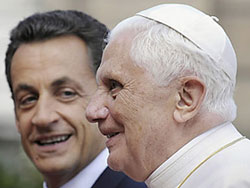
Benedict's discussion of the issue has found a sympathetic listener in the person of French President Nicolas Sarkozy. The Christian Science Monitor reports:
Unlike any French president in decades, Mr. Sarkozy sees a more open role for religion in French society. And he seized upon the conservative German pope's four-day trip to directly challenge French secularism, one of the most prized traditions of La République and a strict legal and cultural sanction against bringing matters of church and faith into the public realm.

Secularism, or laïcité, is central to the modern French identity. It's a result of hundreds of years of efforts to remove the influence of the Roman Catholic church from French institutions and reduce its moral authority. French media don't discuss religion. At offices or work, most French believers don't tell colleagues they are going to mass or church. It is seen as a private matter.

Yet here on Friday Sarkozy and his wife, Carla Bruni, broke protocol and met the pope at the airport. They hosted the pontiff at the Élysée Palace, attended a papal talk at a newly restored Cistercian monastery in downtown Paris in front of 700 intellectuals and artists – where Sarkozy openly argued that while secularism is important, it should not be a hostile force that forbids all talk of God, faith, and transcendence. Sarkozy called for a "positive laïcité" that allows religion to help forge an ethical society.

"It would be crazy to deprive ourselves of religion," remarked Sarkozy, condemning such repression as "a failing against culture and against thought" (Zenit News Service):
Religion, began Sarkozy, "and in particular the Christian religion, with which we share a long history, are living patrimonies of reflection and thought, not only about God, but also about man, society, and that which is a central concern for us today, nature."

It would be crazy to deprive ourselves of religion; [it would be] a failing against culture and against thought. For this reason, I am calling for a positive secularity," he said. "A positive secularity offers our consciences the possibility to interchange -- above and beyond our beliefs and rites -- the sense we want to give to our lives."

The president explained the areas in which this vision of secularism could take root: "France has begun, together with Europe, a reflection on the morality of capitalism.

"Economic growth doesn't make sense if it becomes it's own objective. Only the betterment of the situation of the greatest number of persons and their personal fulfillment constitute legitimate objectives.

"This teaching, that forms part of the heart of the social doctrine of the Church, is in perfect consonance with the challenges of the globalized contemporary economy. Our duty is to listen to it."

"Positive secularism, open secularism, is an invitation to dialogue, to tolerance and respect," Sarkozy acknowledged. "It is an opportunity, an encouragement, a supplementary dimension to the political debate. It is an encouragement to religion, as well as to all currents of thought."

According to the papers, Sarkozy is twice-divorced and a "lapsed Catholic", in light of which I find it most encouraging to see him taking a stand in this manner against stiff opposition from militant secularists.

Related

Monday, August 11, 2008

Archbishop Chaput: "Render Unto Caesar: Serving the Nation by Living our Catholic Beliefs in Political Life"

On August 12, Archbishop Charles J. Chaput of Denver will release his latest book - Render Unto Caesar: Serving the Nation by Living our Catholic Beliefs in Political Life, which focuses on a question of undeniable importance for Catholics in the U.S. but also around the world: What is the role of faith in the public square?

Fr. Robert Imbelli, a Boston College associate professor of Theology, gives readers an insightful and well-written review of the archbishop’s book, which will be published in L’Osservatore Romano.